US House Speaker Applauds President’s Meeting with His Holiness the Dalai Lama

Washington, DC: Speaker Nancy Pelosi released the statement following President Obama’s meeting with His Holiness the Dalai Lama at the White House on Thursday.

“I commend the President for meeting with His Holiness, the Dalai Lama, a champion of peace and non-violence, and a voice for dignity, justice, and respect for all humanity. His Holiness is a source of wisdom and compassion, a powerful spokesman for the moral duty and inherent worth of every person, and a force for human rights across the globe.

“President Obama’s meeting with the Dalai Lama marks another chapter in the long friendship and close ties between the United States and the people of Tibet. As Americans, we must continue to stand with His Holiness to promote, preserve, and protect the rights of all people to live in freedom worldwide.”

Note on the Memorandum on Genuine Autonomy for the Tibetan People

Note on the Memorandum on Genuine Autonomy for the Tibetan People which was formally presented by the Envoys of His Holiness the Dalai Lama to their Chinese counterparts during the ninth round of dialogue in Beijing, PRC.

Translated from the Tibetan original

Introduction

This Note addresses the principal concerns and objections raised by the Chinese Central Government regarding the substance of the Memorandum on Genuine Autonomy for the Tibetan People (hereinafter ‘the Memorandum’) which was presented to the Government of the People’s Republic of China (PRC) on October 31, 2008 at the eighth round of talks in Beijing.

Having carefully studied the responses and reactions of Minister Du Qinglin and Executive Vice-Minister Zhu Weiqun conveyed during the talks, including the written Note, and in statements made by the Chinese Central Government following the talks, it seems that some issues raised in the Memorandum may have been misunderstood, while others appear to have not been understood by the Chinese Central Government.

The Chinese Central Government maintains that the Memorandum contravenes the Constitution of the PRC as well as the ‘three adherences’[1]. The Tibetan side believes that the Tibetan people’s needs, as set out in the Memorandum, can be met within the framework and spirit of the Constitution and its principles on autonomy and that these proposals do not contravene or conflict with the ‘three adherences’. We believe that the present Note will help to clarify this.

His Holiness the Dalai Lama started internal discussions, as early as in 1974, to find ways to resolve the future status of Tibet through an autonomy arrangement instead of seeking independence. In 1979 Chinese leader Deng Xiaoping expressed willingness to discuss and resolve all issues except the independence of Tibet. Since then His Holiness the Dalai Lama has taken numerous initiatives to bring about a mutually acceptable negotiated solution to the question of Tibet. In doing so His Holiness the Dalai Lama has steadfastly followed the Middle-Way approach, which means the pursuit of a mutually acceptable and mutually beneficial solution through negotiations, in the spirit of reconciliation and compromise. The Five-Point Peace Plan and the Strasbourg Proposal were presented in this spirit. With the failure to elicit any positive response from the Chinese Central Government to these initiatives, along with the imposition of martial law in March 1989 and the deterioration of the situation in Tibet, His Holiness the Dalai Lama felt compelled to state in 1991 that his Strasbourg Proposal had become ineffectual. His Holiness the Dalai Lama nevertheless maintained his commitment to the Middle-Way approach.

The re-establishment of a dialogue process between the Chinese Central Government and representatives of His Holiness the Dalai Lama in 2002 provided the opportunity for each side to explain their positions and to gain a better understanding of the concerns, needs and interests of the other side. Moreover, taking into consideration the Chinese Central Government’s real concerns, needs and interests, His Holiness the Dalai Lama has given much thought with due consideration to the reality of the situation. This reflects His Holiness the Dalai Lama’s flexibility, openness and pragmatism and, above all, sincerity and determination to seek a mutually beneficial solution. Read the rest »

Tibetans Celebrate Obama Meeting with Sangsol and Fireworks in Tibet

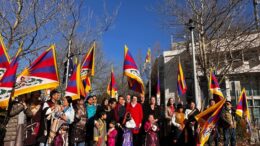
His Holiness the Dalai Lama is greeted by members of the Tibetan community as he arrives at the Park Hyatt Hotel in Washington on 17 February  2010/REUTERS
His Holiness the Dalai Lama is greeted by members of the Tibetan community as he arrives at the Park Hyatt Hotel in Washington on 17 February 2010/REUTERS

Dharamshala: Tibetans living near the birthplace of His Holiness of the Dalai Lama in Tibet’s Amdo Province welcomed Thursday’s scheduled meeting between His Holiness the Dalai Lama and US President Barack Obama with incense burning ceremony (Sangsol) and fireworks, Reuters news agency reported Wednesday.

Reuters reported of “midnight display of fireworks along a valley dotted with Tibetan Buddhist monasteries in Rebgong”.

“My heart is filled with joy,” said Johkang, showing off an enormous smile, standing at his monastery. “It is so important for us that this is happening, that the US has not given in to threats and will meet our leader,” added the monk.

Tibetans set off fireworks at this time of year anyway to mark the start of their traditional lunar new year.

But many Tibetan monks in Rebgong told Reuters that this year they were also marking His Holiness the Dalai Lama’s scheduled meeting in the White House.

“We do this whenever something big, and good happens,” said Losan, swathed in the vermillion robes of a Buddhist holy man, standing on a hillside above a monastery where monks were lighting fireworks in the early hours of Thursday.

“He’s really going to meet Obama?” interrupted a monk standing next to him, sounding somewhat incredulous.

“I heard it on Voice Of America,” Losan told him confidently.

The sound of conch shells being blown echoed around the valley as a group of monks burned an offering of flour and a ceremonial Tibetan scarf on a fire.

“I’m very excited about who the Dalai Lama is going to meet,” said one Tibetan woman, who declined to be identified citing the sensitive nature of the topic. “But I worry about what measures the government could take against us in retaliation.”

Word of the His Holiness the Dalai Lama’s meeting with Obama has filtered through to Amdo through Tibetan-language foreign radio broadcasts, monks told Reuters. Read the rest »

President Obama to Encourage China and His Holiness the Dalai Lama to Talk

Dharamshala: US President Barack Obama would encourage both the Chinese leadership and His Holiness the Dalai Lama to continue to talk.

“The President would simply encourage the two parties to continue to talk,” said White House Press Secretary Robert Gibbs, about the meeting between Obama and His Holiness the Dalai Lama.

He said a briefing would be provided after the two leaders met Thursday morning in the White House Map Room where US presidents normally meet visiting heads of state.

During the ninth round of talks held in China from 26 – 31 January, the envoys of His Holiness the Dalai Lama had urged the Chinese leadership to work with His Holiness to find a mutually acceptable solution to the Tibetan problem based on the Memorandum on Genuine Autonomy for the Tibetan People.

“The fundamental issue that needs to be resolved is the faithful implementation of genuine autonomy that will enable the Tibetan people to govern themselves in accordance with their own genius and needs,” the envoys told the Chinese leadership. (Click here for full coverage of press briefing by two envoys)

“His Holiness the Dalai Lama speaks on behalf of the Tibetan people, with whom he has a deep and historical relationship and one based on full trust. It cannot be disputed that His Holiness legitimately represents the Tibetan people, and he is certainly viewed as their true representative and spokesperson by them. It is indeed only by means of dialogue with His Holiness the Dalai Lama that the Tibetan issue can be resolved. The recognition of this reality is important. Read the rest »

His Holiness the Dalai Lama Attends Religious Ceremonies on Tibetan New Year

His Holiness the Dalai Lama speaks to thousands of Tibetans after attending religious ceremonies in Dharamsala, India, on 14 February 2010/Photos:Office of His Holiness the Dalai Lama/Tenzin Choejor
His Holiness the Dalai Lama speaks to thousands of Tibetans after attending religious ceremonies in Dharamsala, India, on 14 February 2010 Photos:Office of His Holiness the Dalai Lama/Tenzin Choejor

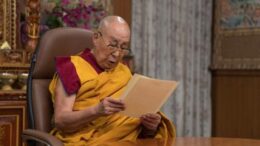
Dharamshala: His Holiness the Dalai Lama presided over religious ceremonies at the main Buddhist temple in Dharamshala this morning, marking Losar or the “Year 2137 of the Iron-Tiger” of Tibetan calender. (click here for audio and video webcast)

Later, His Holiness the Dalai Lama delivered a brief address to thousands of Tibetans gathered for the ceremony.

His Holiness offered greetings to Tibetans living inside and outside Tibet and people of the Himalayan region who share same culture and religion as Tibetans. His Holiness extended his good wishes and gratitude to the international community for taking interest in and supporting the just cause of Tibetans.

“Despite facing great problems in Tibet for many years, the Tibetan people living inside have shown indomitable courage and sincerity in standing up to the situation,” said His Holiness the Dalai Lama.

His Holiness said “Tibetans in living in many parts of Tibet are marking the year as a year of remembrance of Tibetan people’s suffering,” adding that “they refrain from festivities during the Losar.” With such sentiments of our brethren in Tibet, His Holiness advised Tibetans to offer prayers by engaging in religious ceremonies and eschew festive celebrations.” Read the rest »