
One More Tibetan Self-immolates in Ngaba, Local Area Under Undeclared Martial Law

Press Release

13 March 2012 The Central Tibetan Administration is deeply saddened by the death of another young Tibetan due to self-immolation in Ngaba in northeastern Tibet. The incident occurred on 10 March, the day which marked the 53rd anniversary of the Tibetan National Uprising against the repression of the invading forces of People’s Republic of China’s government. We offer our prayers and condolences to his family members. Gepey, an 18-year-old monk of Kirti Monastery, set himself on fire and shouted slogans against the Chinese government in Ngaba. He succumbed to his injuries on the spot. His body was then immediately taken away to a nearby military garrison. Next day, the local residents demanded that his body be returned to his family, which led to a long verbal confrontation. At around 10 PM, the body was finally cremated secretly under strict surveillance of the Chinese army.  The police detained the deceased monk’s mother for interrogation on 11-12 March. Ngaba is now under undeclared martial law, as reinforcement of paramilitary forces and armed police have been deployed in the region. With this latest incident of self-immolation, 27 Tibetans have set themselves on fire calling for  freedom and the return of His Holiness the Dalai Lama to his homeland. 14 of these incidents occurred in this year alone.  These unending incidents of tragic self-immolation testify to the dire situation in Tibet which is driving Tibetans to take these unfortunate actions. “His Holiness the Dalai Lama and the Central Tibetan Administration have always discouraged such drastic actions. However, despite our pleas, Tibetans continue to self-immolate. Fault lies squarely with the hardline leaders in Beijing, so does the solution,” said Kalon Tripa Dr Lobsang Sangay on 10 March. The Central Tibetan Administration reiterates that the Chinese leadership must address the underlying grievances of the Tibetan people through dialogue and remove its military occupation of Tibet, particularly in the Ngaba region.

Media contacts:

Tashi, Secretary for Information

+91 9816843798

Lobsang Choedak, Press Officer

+91 98822 32476

Statement of Kalon Tripa Dr. Lobsang Sangay (Political Head of the Tibetan People) on the 53rd Anniversary of the Tibetan National Uprising Day

(Watch Kalon Tripa’s statement on tibetonline.tv)

Today, on the 53rd anniversary of the Tibetan National Uprising Day and the fourth anniversary of the 2008 mass protests in Tibet, I offer tribute to the brave people who have sacrificed so much for Tibet. Despite fifty-three years of occupation by the People’s Republic of China (PRC), the Tibetan spirit and identity inside Tibet remains unbroken.

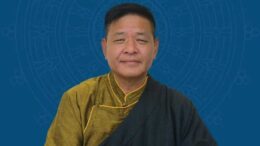
lon Tripa Dr Lobsang Sangay addressing the commemoration of the 53rd anniversary of the Tibetan National Uprising Day in Dharamsala, India, on 10 March 2012/Photo by Namgyal Tsewang/Tibetonline TV
On this occasion, I pay homage to His Holiness the Dalai Lama for his vision, leadership and benevolence. I also pay my deepest respect and gratitude to our elders for their contribution and tireless effort that have sustained our movement’s growth and dynamism over the past fifty years.

One year ago, when His Holiness the Dalai Lama announced the transfer of his political power to a democratically elected leader, Tibetans were apprehensive and implored him to reconsider. Today, the world recognizes and applauds His Holiness’ vision and magnanimous decision. Tibetans are making a smooth transition with the free, fair and multi-candidate 2011 parliamentary and Kalon Tripa elections that involved exile and diaspora Tibetans in over forty countries.

I am deeply honored by the spiritual blessings, legitimacy, political authority and continuity bestowed upon me by His Holiness the Dalai Lama. In his statement at my inauguration ceremony on August 8th, 2011, His Holiness said “when I was young, an elderly regent Takdrag Rinpoche handed over Sikyong (political leadership) to me, and today I am handing over Sikyong to young Lobsang Sangay…in doing this, I have fulfilled my long-cherished goal.”

I am also enormously moved by the solidarity and endorsements from Tibetans inside Tibet during the elections and since assuming my political post. I have had many deeply moving encounters with hundreds of Tibetans from Tibet as they generously offered their blessings and support. Read the rest »

UN Special Rapporteur challenges China’s forced resettlement policy in Tibet

GENEVA, 6 March: The UN Special Rapporteur right to food Mr. Olivier De Schutter this afternoon challenged China’s forced resettlement policy in Tibet during the interactive debate at the UN Human Rights Council 19th Session in Geneva.

“I believe there are many serious problems in China and not least the situation of herders in Tibet,” he said. The Special Rapporteur’s China report was released on 20 January 2012. It called for the suspension of the non-voluntary resettlement of Tibetan nomadic herders from their traditional lands. And said China must improve employment opportunities, education and health services in “new socialist” villages, in order to enable the realization of the right to adequate food of all resettled rural habitants. He visited China in December 2010. (Read report) The report urged China to “allow for meaningful consultations to take place with the affected communities, permitting parties to examine all available options, including recent strategies of sustainable management of marginal pastures.”

During the interactive debate the European Union said, “We are concerned about the impact of these resettlements on Tibetan nomads, herders and other rural residents, and would like to hear more about whether the SR has been able to engage the Chinese authorities with the view to the implementation of these recommendations.” The Chinese delegation expressed concerns about the content of the report. China rejected the allegations made by the Human Rights Watch and Helsinki Foundation for Human Rights in their oral statements. The delegation said that the nomadic herders were resettled to improve the sustainable economic and social developments in the region and has been widely supported by farmers and herders.  The resettlement of nomads and herders in China’s Western provinces including Tibet were “very popular polices”.

In response, the Special Rapporteur made references to a September 2011 Xinhua news report which said, “Most of the new migrants still miss their nomadic lives, yearning to listen to the yaks and tread the grasslands of their ancestral home.” He said the Xinhua news report quoted a Tibetan saying that his family now lives on an annual governmental subsidies that is “less than the price of two yaks. Everything is so expensive here in town.” The Special Rapporteur said the figures he had given – 200,000 nomads in Qinghai resettlement program alone, 64,000 families since 2009. And the plan is to move 50,000 Tibetan nomads to be resettlement by end of 2012 were data from China’s official News Agency Xinhua. “This policy of forcible resettlement demonstrating that this is very large-scale development,” he said. Mr. Schutter said that the resettlement policies were failing because since March 2011, 25 Tibetans self-immolated in protest against the policies that are implemented in this region. He said 18 of the 25 who burned themselves were actually herders forcibility resettled in the new socialist villages. “This I have to say is not compatible with the idea that these would be I quote “very popular polices”, he said. Responding to Chinese delegation statement that the Special Rapporteur hadn’t been to Tibet, he said, “I am told that I can’t comment on this because I cannot travel to Tibet.” In his final remark he said “regularly the communication system, internet, phones, sms are blocked and that Tibet is currently completely closed to independent observes including the media, in fact BBC journalist was threatened with expulsion if he reported on Tibet.” (Watch)


Central Tibetan Administration Mourns Tragic Self-immolation of two more Tibetans

5 March 2012

DHARAMSHALA: The Central Tibetan Administration is deeply concerned and saddened by the latest development in Tibet involving a 32-year-old mother and a student setting themselves on fire to protest against the continuing occupation of Tibet by the People’s Republic of China. Both of them have died.

Rinchen, a mother of four children, set herself on fire in front of the police station at the entrance of Kirti Monastery in Ngaba in northeastern Tibet on 4 March. She shouted slogans demanding freedom and the return of His Holiness the Dalai Lama to Tibet. She died on the spot.

On 3 March, Tsering Kyi, a 20-year-old Tibetan student died after setting herself on fire at a vegetable market in Machu in eastern Tibet. Media reports state that the Tsering Kyi was a middle school student.

The current situation in Ngaba is tense following this latest self-immolation incident, as large number of security forces and police have been deployed in the region.

Moreover, Rigzin Dorjee, the monk of Kirti monastery who self-immolated in February 2012 is reported to have succumbed to his injuries at a local hospital. The Chinese authorities cremated him in Barkham despite pleas from his relatives to have his body returned to them. Another monk from Kirti monastery, Lobsang Kunchok, who self-immolated in September 2011, is in serious condition following amputation of his legs and arms. He is being fed through a tube in his throat. The staff at the hospital are reported to physically abuse him with beatings and label him “enemy of the state”.

The Central Tibetan Administration would like to offer its deep condolences to the family members of the three Tibetans who died from self-immolation.

We call on the Chinese government to allow those injured from self-immolations to get proper medical treatment.

“We are deeply troubled by reports of such cruel treatment of fellow human beings. We appeal to the Chinese government to demonstrate greater wisdom in its handling of the current tense situation,” stated Dicki Chhoyang, Kalon for the Department of Information & International Relations.

Media contacts:

Tashi, Secretary for Information +91 9816843798

Lobsang Choedak, Press Officer +91 98822 32476

Kalon Tripa Dr. Lobsang Sangay to receive Gold Medal

Lobsang Sangay
LONDON, 29 February: Kalon Tripa Dr. Lobsang Sangay will receive the Gold Medal for Outstanding Contribution to Public Discourse from the College Historical Society (CHS) of Trinity College, Dublin. Trinity College is the most prestigious university in Ireland and regarded as a sister college of Oxford and Cambridge in the UK.

The Gold Medal award ceremony will take place at Trinity College on Thursday 1 March.

The CHS is the oldest undergraduate debating society in the world and still continues today as the centre of oratory and debate in Trinity College. The Society’s purpose is to promote and develop oratory and to provide an international forum for discourse and debate. The CHS Gold Medal is awarded to acknowledge the efforts of those who promote these on the world stage.

Former recipients of the CHS Gold Medal include former British Prime Minister Sir John Major, former Taoiseach, Albert Reynolds, Nobel Peace Prize Laureates Aung San Su Kyi, Dr Shirin Ebadi and Archbishop Desmod Tutu, and former Irish President Mary Robinson among others.

In explaining the reason for the award to Dr. Sangay, the Treasurer of the CHS Mr John Engle said: “As a spokesman for the cause of Tibet, Dr. Sangay has taken the lead in advocating the rights of the Tibetan people around the world.

“His message is an essential one to consider.”

The Kalon Tripa in accepting the Gold Medal, said: “It is a real honour to be included in the august company of the past recipients of the Medal.

“It has always been my belief that discourse and intellectualism are vital to the progress of the society.

“The honour bestowed upon me strengthens my belief and I humbly accept the recognition on behalf of all the Tibetan people.”

As part of the Gold Medal award ceremony, Kalon Tripa is scheduled to address the College Historical Society in Trinity College at 2pm on Thursday 1 March followed by a question and answer session with the assembled guests.

Report sent by Office of Tibet, London