
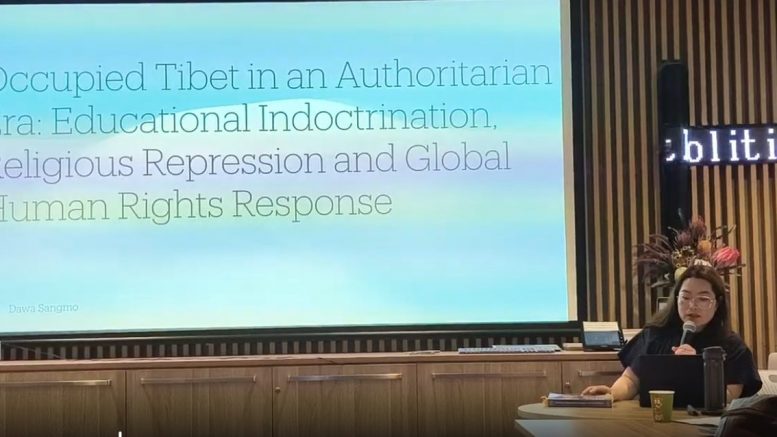
Sydney, Australia: Marking the 77th anniversary of the Universal Declaration of Human Rights, the Asia Pacific Research Group hosted a conference titled “Resistance Against Political Repression in the Asia-Pacific Region” at the University of Technology Sydney (UTS). The event brought together academics, rights advocates, and community representatives from Tibet, East Turkestan (Uyghur), Hong Kong, and Taiwan to examine the growing challenges posed by state repression across the region.
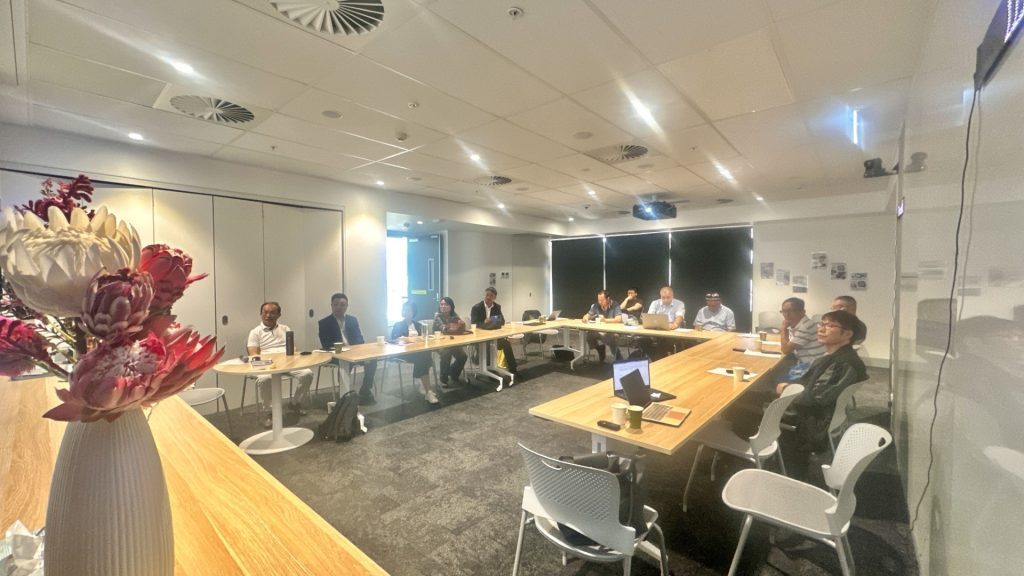
Dawa Sangmo, Chinese Liaison Officer at the Tibet Information Office, delivered a presentation titled “Occupied Tibet in an Authoritarian Era: Education Indoctrination, Religious Repression, and the Global Response.” She provided a detailed overview of China’s boarding school system in Tibet, tracing its expansion since the 1980s and highlighting its intensification since 2018 under President Xi Jinping’s campaign to impose Han-centric ideology on Tibetan children as young as four years old.
Sangmo also highlighted the cases of revered Tibetan religious leader Tulku Hongkar Dorje, who was murdered, and Shesang Gyatso, who died by suicide, underscoring China’s escalating use of transnational repression and the severe psychological toll on Tibetans living under constant surveillance and political pressure.
She noted that several UN member states, including Australia, have called on China to release Tibetan and other human rights defenders during sessions of the UN Human Rights Council. While the international community increasingly recognises China as a major threat to human rights, she emphasised that translating this recognition into practical and sustained action remains a significant challenge.
Conference convenor Professor Chongyi Feng presented an in-depth analysis of China’s democracy movement from 1949 to 2025, examining cycles of totalitarianisation and re-totalitarianisation both before and after the establishment of the People’s Republic of China.
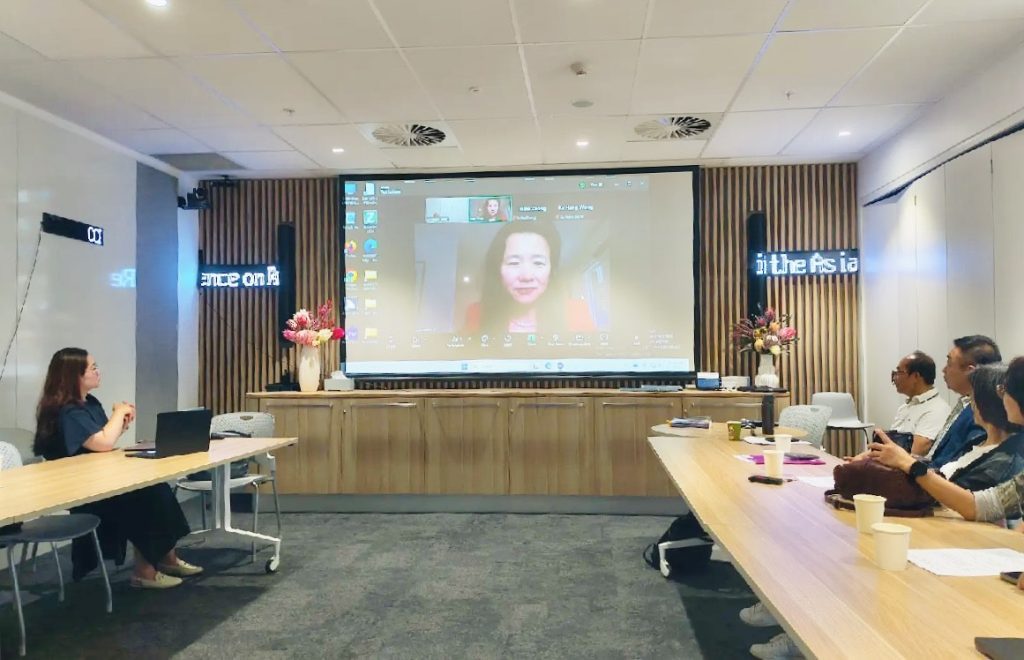
Other speakers included Chinese Australian journalist Cheng Lei, Australian Uyghur Association president Mehmet Celepci, Taiwanese advocate Sussie Su, Hong Kong activist Ha Kang Wong, and former TCHRD executive director Tsering Tsomo. Each shared the experiences of their respective communities, drawing parallels between the forms of repression they face and the strategies they employ to resist tightening authoritarian control. Their contributions fostered comparative understanding and encouraged the exchange of effective strategies for advocacy, solidarity, and human rights protection.
– Report filed by Office of Tibet, Canberra