
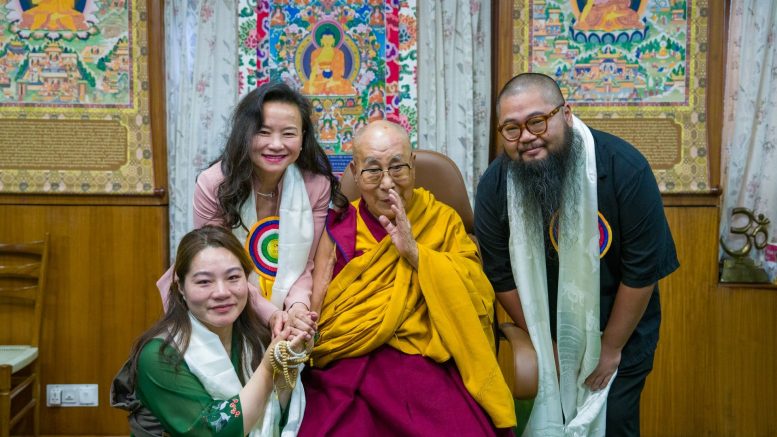
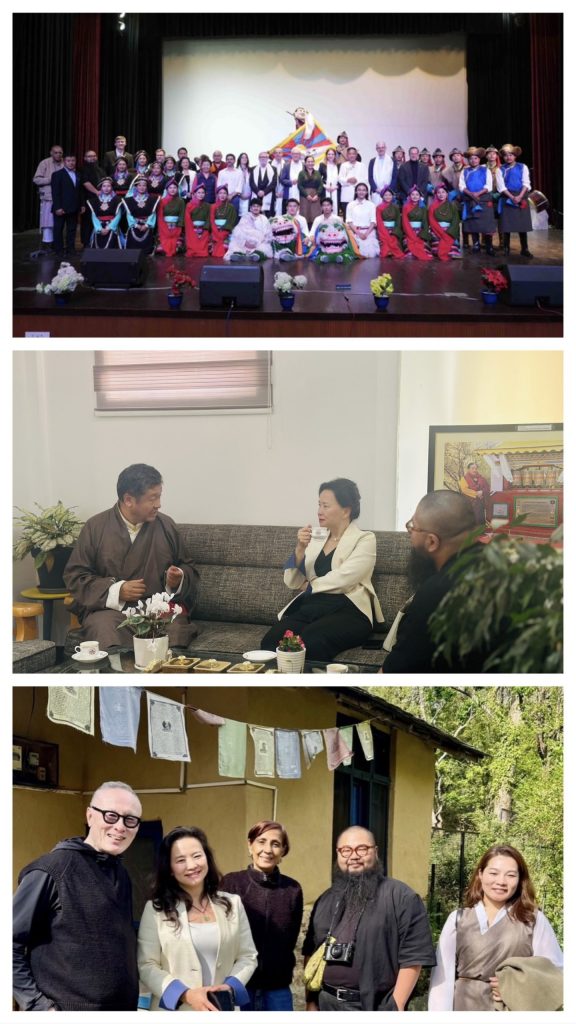
Canberra: In line with the Central Tibetan Administration’s designation of 2025–2026 as the Year of Compassion, honouring the 90th birth year of His Holiness the Dalai Lama, the Tibet Information Office led an Australian-Chinese delegation to Dharamshala from 9 –13 March 2026. The delegation, accompanied by Chinese Liaison Officer Dawa Sangmo, included Cheng Lei, a Chinese-born Australian journalist and television presenter at Sky News Australia, and Badiu Cao, an Australian-Chinese political artist and human rights activist.
On 10 March, the delegation joined Sikyong Penpa Tsering and his cabinet, along with international delegations from Europe and North America, as hundreds of Tibetans gathered at the Tsuglagkhang courtyard to mark the 67th anniversary of the Tibetan National Uprising Day. Prior to the event, the delegation was granted a private audience with His Holiness the Dalai Lama. During the meeting, the delegation had the opportunity to interact with His Holiness, while artist Badiu Cao presented an artwork in honour of His Holiness’ recent receipt of a Grammy Award for a spoken-word album on compassion and peace. Chenglei, as a special guest, also delivered a speech during the Central Tibetan Administration’s official function of the day.
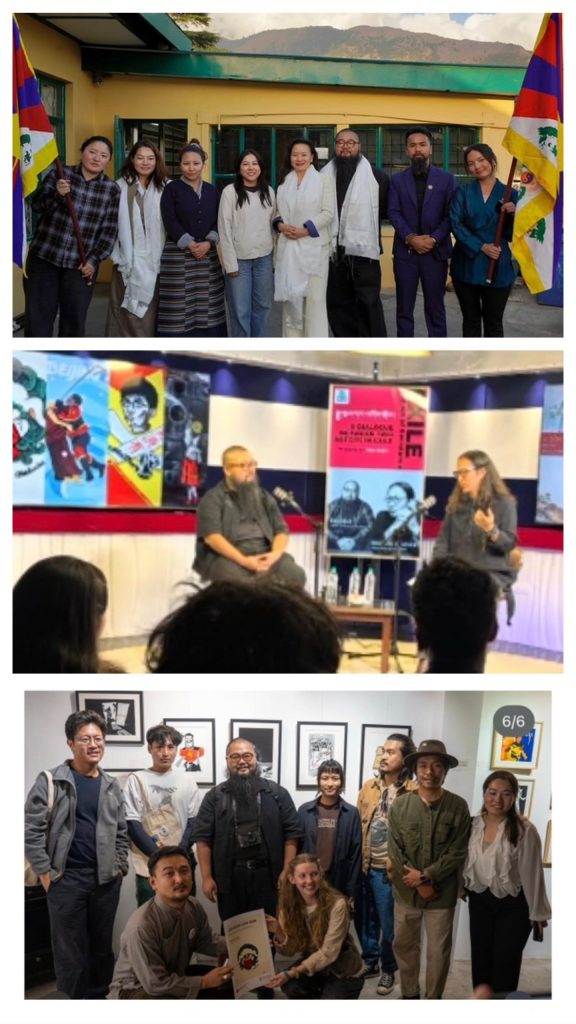
That evening, the Tibet Information Office, in collaboration with Khadhok Art, organised an exhibition titled “Snow Lion, Sun”, featuring works by Badiu Cao and Tibetan satirical artist Cacus. The well-received exhibition highlighted themes of censorship and human rights repression in China.
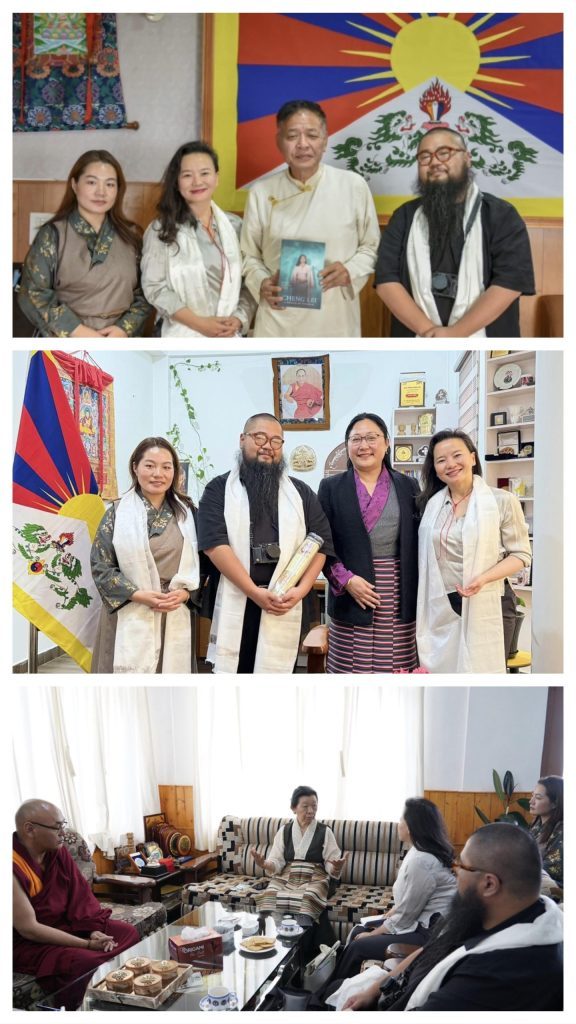
On 11 March, the delegation met with Sikyong Penpa Tsering and Kalon (Minister) Norzin Dolma, of Department of Information and International Relations, in a separate meetings as well as the Speaker Khenpo Sonam Tenphel and Deputy Speaker Dolma Tsering Teykhang of the Tibetan Parliament-in-Exile.
The delegation also took part in an expert talk series organised by the Tibet Policy Institute, titled “Understanding China’s System of Political Repression: Voices of Resistance through Art and Journalism.”Later that evening, Tibet Radio hosted an exclusive talk show, “Exile: The Art of Resistance,” featuring Badiu Cao alongside Tibetan writer, poet, and translator Bhuchung D. Sonam.
On 12 March, the delegation visited Tibet TV, where Cheng Lei sat for an interview for In Conversation with Tibet TV. This was followed by a China-focused expert discussion co-organised by the China Desk of the Department of Information and International Relations (DIIR) and the Tibet Information Office at Lhakpa Tsering Hall. In the afternoon, the delegation engaged with representatives of local non-governmental organisations at the headquarter of the Tibetan Youth Congress, followed by a podcast interview with Khyeltam.
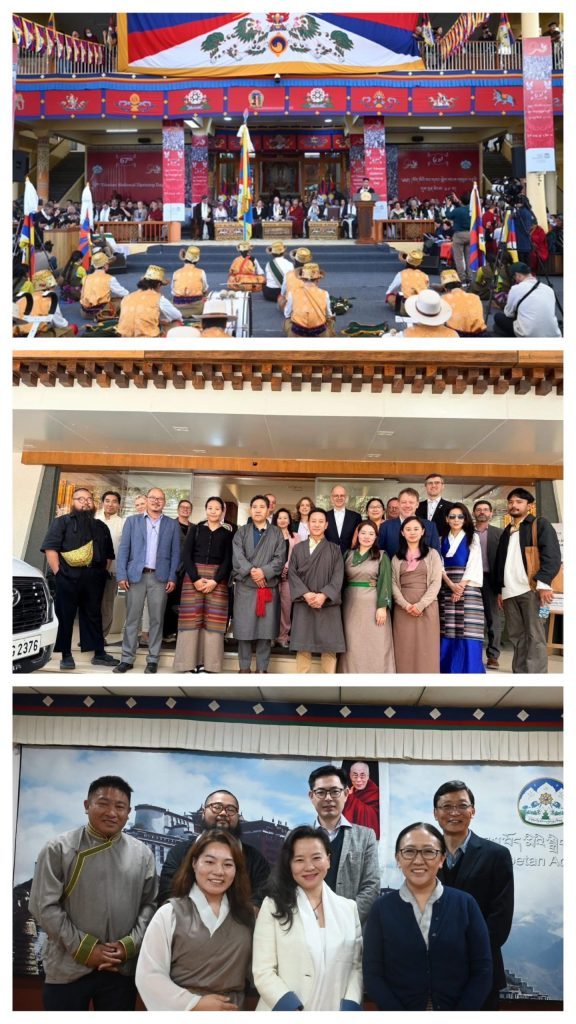
On 13 March, the delegation travelled to New Delhi for their final engagement, attending a seminar organised by the School of International Studies at Jawaharlal Nehru University, chaired by Professor Srikanth Kondapalli. The discussion were held under the themes “What Lies Beneath China’s Glossy Facade?” and “How to Be a Political Artist at the End of the World.”
Over the course of the week-long visit, the delegation gained deeper insights into Tibet’s contemporary history, the evolution of democratic governance in exile, and the structure and functioning of the Central Tibetan Administration, as well as the Middle Way Approach to addressing the Sino-Tibet conflict. The discussions also addressed broader contemporary challenges, including ways to counter China’s repression and censorship using advanced technologies such as artificial intelligence.
– Report filed by Office of Tibet, Canberra